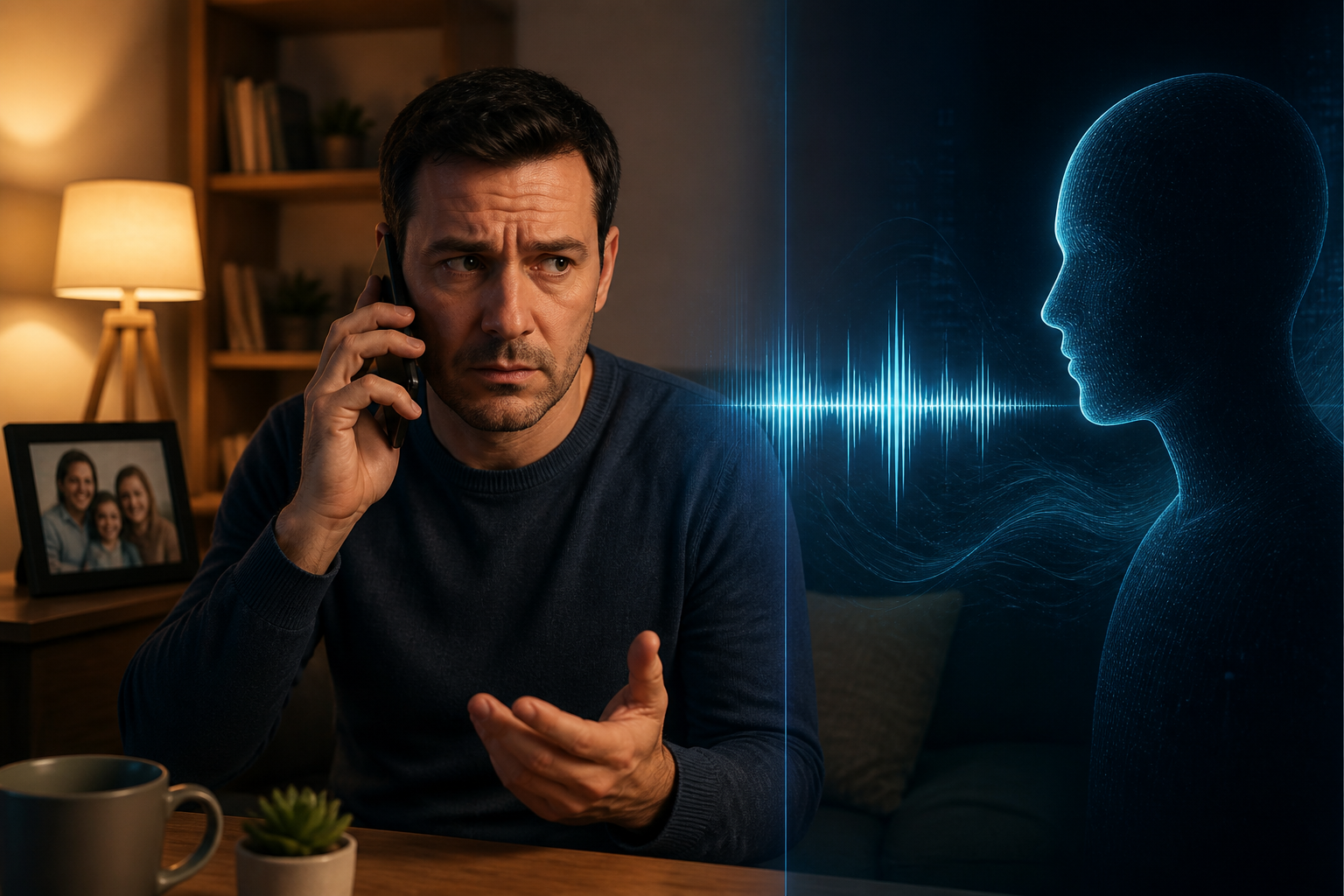
Imagine receiving a call from your child, partner, or sibling. The voice sounds very similar, but they claim to be in an accident, detained, or have lost their wallet. They urgently ask for money and forbid you from telling anyone else.
Scenarios like this are not just fictional tales. Scammers can use voice cloning, a technology that creates artificial voices based on recordings of someone's voice. According to the Federal Trade Commission, short voice recordings available on the internet can be exploited to create voices that sound like specific individuals.
The issue is not just about the technology, but also how scammers manipulate emotions. When hearing the voice of a loved one in a panic, many people immediately focus on how to help, rather than checking if the caller is truly who they claim to be.
Why Is Voice No Longer Enough to Prove Identity?
In the past, a familiar voice might have felt like a strong identifier. Now, voices should be treated like profile pictures, account names, or phone numbers: useful as clues, but not definitive proof.
Scammers can combine various publicly available information. Family member names, addresses, jobs, and even voice recordings from social media can be used to create a plausible story. They do not need to know every detail. It is enough to make the victim believe that the situation is urgent.
This technique usually runs alongside old scam patterns: creating panic, demanding secrecy, and then pushing victims to use hard-to-cancel payment methods. Requests for quick transfers, gift card purchases, cryptocurrency sending, or using someone else's account are warning signs to watch out for.
Patterns to Be Suspicious Of
- The situation is made to seem very urgent. You are asked to send money within minutes due to an accident, legal issue, or emergency.
- The caller demands secrecy. You are forbidden from contacting other family members, friends, or authorities.
- Identity cannot be verified through other means. The caller refuses video calls, does not want to answer simple questions, or keeps diverting the conversation.
- Payment methods are unusual. You are asked to buy gift cards, send cryptocurrency, transfer to a new account, or provide payment codes.
- Information is partially correct, but the story is incomplete. Scammers may know names and family relationships but cannot explain details only known to the actual person.
One sign does not necessarily prove a scam. However, a combination of several signs above is enough reason to end the conversation and conduct a separate verification.
Safe Steps When Receiving Suspicious Calls
- Do not immediately follow the caller's pace. Take a breath, note the name, location, and request made. Scammers want you to react before you have time to think.
- Politely end the call. Say that you will call back. You do not need to argue or prove that the caller is lying.
- Contact the person through a saved number. Do not use the number provided by the caller, as that number could be controlled by the scammer.
- Use another channel. Send a message through a commonly used app, contact your partner or another family member, or call their workplace and close friends.
- Do not send money until verification is complete. A convincing voice is still not a reason to skip verification.
If you cannot reach the person mentioned, it does not mean the caller's story is automatically true. In fact, that situation is a reason to delay the transaction, not expedite it.
Create a “family password” before an emergency occurs
One simple way is to create a verification word or question known only to close family members. For example, you could agree on the name of a childhood pet, a specific local shop, or a phrase that has never been shared on social media.
This password is not a substitute for the entire verification process. Scammers could fish for the answer if the family discusses it too much. However, this agreement can serve as an additional layer of verification, especially when calls come in a panic.
More importantly, also agree on the procedure: no family member should request emergency transfers without being able to be contacted again, and there should be no requests to keep issues secret from the entire family.
Reduce materials that can be used to impersonate you
You do not have to delete all voice recordings from the internet. However, review who can see your uploads, videos, and live broadcasts. IC3 FBI recommends limiting publicly accessible image or voice content and setting social media accounts to be accessible only to known individuals.
Avoid sharing too many details about routines, locations, children's school names, or real-time travel information. These small pieces of data can help scammers craft a story that feels personal.
If You Have Already Sent Money
Immediately contact your bank, digital wallet provider, transfer service, or payment platform used. Explain that the transaction is related to a scam and ask if it can still be canceled or held.
Keep the phone number, conversation recordings if available, transfer proof, account address, and screenshots. Do not delete them as they can assist in the reporting process. After that, inform family or friends so they do not fall victim to the same scenario.
What to remember: the goal of verification is not to prove that we are smarter than the scammer. The aim is to create a pause of a few minutes between panic and financial decisions. In voice-based scams, that small pause can provide significant protection.
Sources & Further Reading
- Scammers use AI to enhance their family emergency schemes
- Criminals Use Generative Artificial Intelligence to Facilitate Financial Fraud
– Rio Yotto @rioyotto