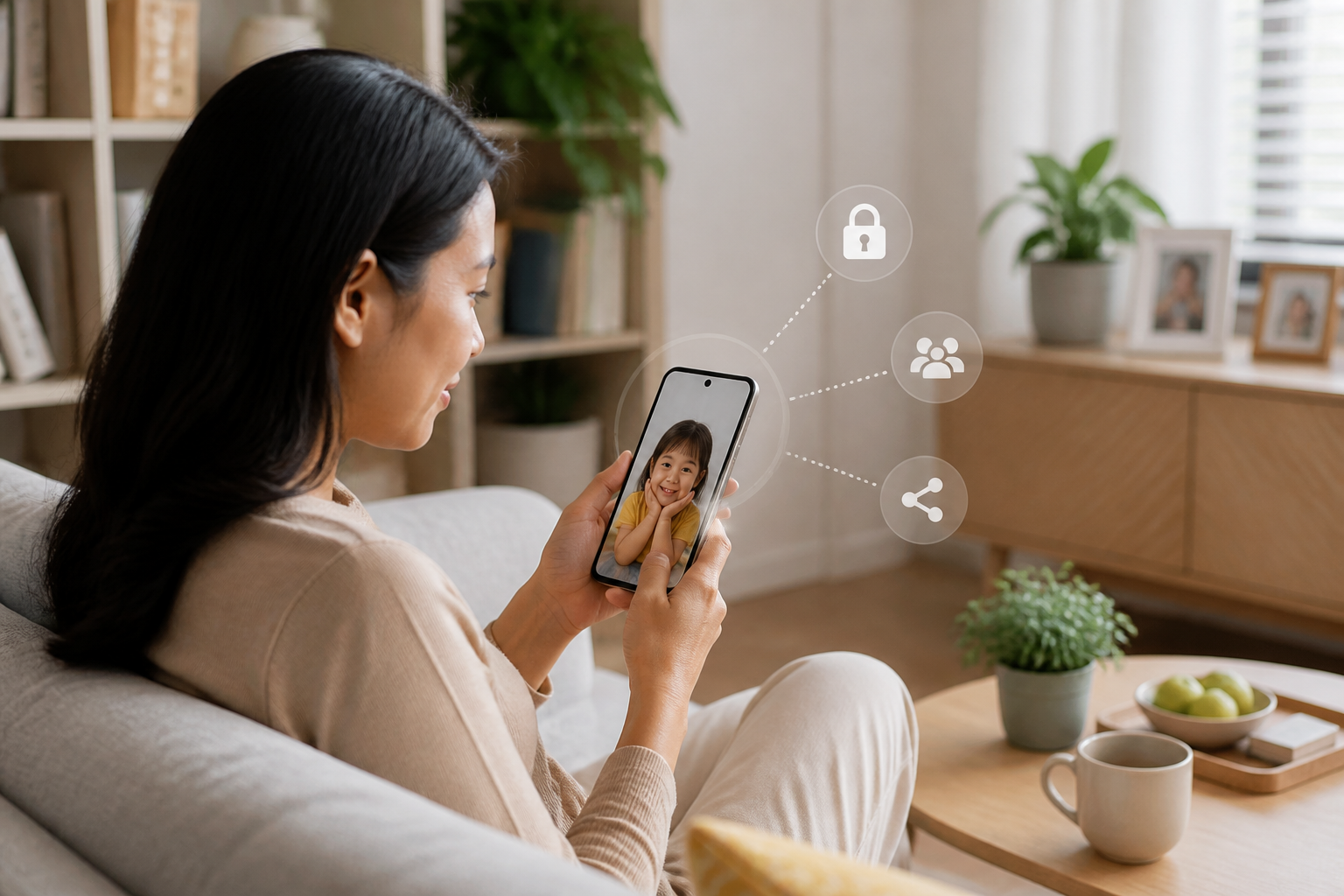
Photos of children in school uniforms, birthday videos, or images of them playing often feel too precious to keep to oneself. However, before uploading them to social media or forwarding them to a chat group, it's wise to pause: who can see it, what information might be revealed, and will the child be comfortable if this photo circulates for years to come?
UNICEF refers to the habit of parents sharing information about their children as sharenting. The risks are not just about photos being copied by others, but also about the creation of a digital footprint, which is a collection of information about someone stored from uploads, comments, and online activities. Therefore, protecting a child's privacy does not necessarily mean stopping sharing altogether. What’s more important is to share mindfully.
1. Determine who really needs to see it
Do not equate “family” with “everyone on the internet.” A photo sent to a family group of 15 people carries different risks than a photo uploaded to a public account or a status visible to many contacts.
Before hitting send, ask three questions:
- Do all recipients know the child in person?
- Are there group members who often forward photos elsewhere?
- Does this photo need to be shared with everyone, or just one or two family members?
Editorial opinion: the more personal the content of the photo, the smaller the circle of recipients should be. For very personal moments, sending directly is often wiser than uploading it to a status or public account.
2. Check location and identity indicators
A photo can reveal a location without directly stating the address. School logos, street names, store signs, house numbers, uniforms, or the front of a house can help others guess where the child is active.
Also, pay attention to the captions accompanying the photo. Phrases like “every Tuesday and Thursday the child has lessons here” may seem ordinary, but when combined with a photo and schedule, this information can depict the family's routine.
Google explains that cameras can store location information along with photos if location settings are enabled. In Google Photos, the location of a photo may be shared under certain conditions, depending on how sharing is done and the settings used. Even when location data is not included, others may still estimate it from visual cues in the image. ([support.google.com](https://support.google.com/photos/answer/6153599?co=GENIE.Platform%3DDesktop&hl=en&utm_source=openai))
3. Avoid sharing overly sensitive photos
There are types of photos that should never be shared in uncontrolled digital spaces, including photos of children without clothing, when they are sick, crying, being punished, or in situations that could embarrass them later.
UNICEF reminds parents to consider the possibility of an image being reused inappropriately or becoming a source of shame for the child. This advice is not meant to scare, but to remind that parents' good intentions do not always dictate how images are used by others. ([unicef.org](https://www.unicef.org/parenting/child-care/sharenting?utm_source=openai))
Use a simple rule: if the child might ask to have the photo removed when they are older, don’t upload it in the first place.
4. Involve the child in the decision
For children who are old enough to understand the situation, ask for their consent before uploading a photo. Show them the selected image and explain who will see it. If the child says no, respect their answer even if the parents think the photo is cute or nice.
This habit teaches that a person's face, story, and experiences are not automatically someone else's to share. UNICEF also emphasizes the importance of involving children in decisions regarding content that features them, as a way to introduce the concept of consent and respect for privacy. ([unicef.org](https://www.unicef.org/parenting/child-care/sharenting?utm_source=openai))
For babies or children who cannot express their opinions, parents can still apply the same principle: choose uploads that reveal the least personal information and are least likely to make the child uncomfortable in the future.
5. Don’t rely on deletion as a magic button
Deleting a post is indeed a good step if you change your mind, but deletion does not guarantee that all copies will disappear. Others may have already downloaded, taken screenshots, or forwarded it elsewhere.
Therefore, think before sharing, rather than just relying on the ability to delete after a problem arises. If you have already uploaded many photos of your child, there’s no need to panic. Start reviewing old uploads and delete content that is too personal, no longer relevant, or potentially embarrassing for the child. UNICEF suggests that parents conduct such reviews periodically and involve the child when they are old enough. ([unicef.org](https://www.unicef.org/parenting/child-care/sharenting?utm_source=openai))
6. Create simple rules for the extended family
Children's privacy often leaks not because of parents, but because photos are forwarded by siblings, caregivers, or friends. Therefore, establish agreements that are easy to understand, such as:
- Children's photos should not be uploaded to public accounts without parental permission.
- Do not include home addresses, school names, or routine schedules.
- Embarrassing photos, those taken when sick, or without clothing should not be shared.
- Do not tag locations directly when the family is still at the place.
- If asked to delete a photo, delete it without arguing.
Communicate these rules in a cooperative tone, not as accusations. A phrase like “We are limiting our child's information on the internet, so please don’t upload without asking first” is usually more effective than blaming someone.
7. Do a 30-second check before sending
Here’s a quick routine to use every time you are about to share a photo of your child:
- Pause: don’t upload immediately while caught up in the moment.
- Zoom in on the photo: look for addresses, signs, uniforms, vehicle numbers, or other details in the background.
- Check the text: remove unnecessary schedule and location information.
- Check the audience: ensure the recipients are indeed the intended ones.
- Imagine the future: will the child be okay seeing this photo as a teenager?
What does this mean for us?
Protecting a child's privacy does not mean being a paranoid parent or not sharing happiness. The essence is to reduce unnecessary information and choose the right sharing space.
Start with one habit today: before uploading a photo of your child, check the background, captions, and who can see it. If still in doubt, save the photo for family collection or send it privately. Happy moments can still be shared—just with more control and less risk.
Sources & further reading
- UNICEF Parenting – What you need to know about sharenting
- UNICEF Parenting – Online privacy checklist for parents
- Google Photos Help – Understand, find & edit your photos’ locations
- Google Photos Help – How Google Photos protects your location data
– Rio Yotto @rioyotto