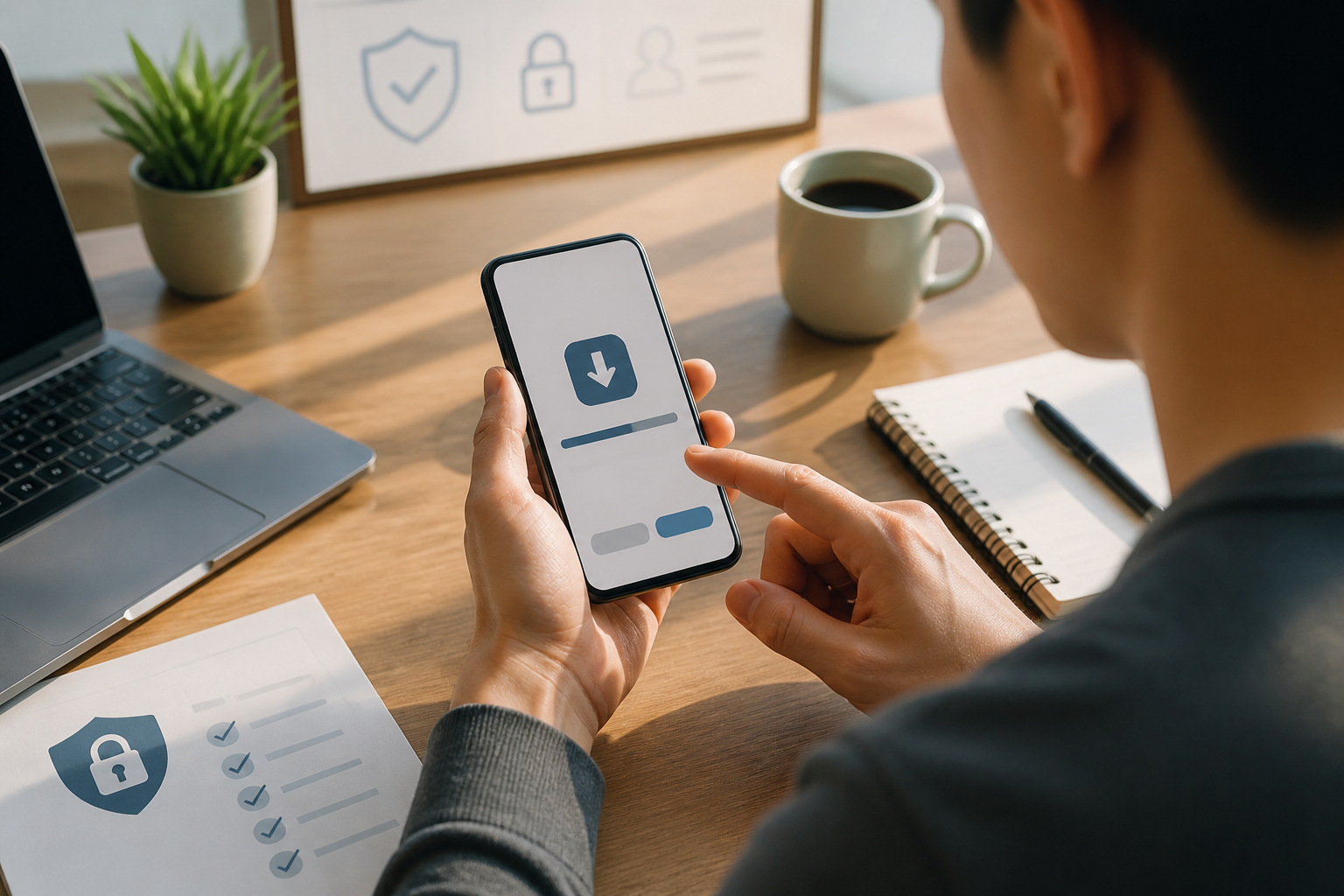
Pressing the Install button feels like a small task. However, that's where we can inadvertently install fake apps, apps filled with excessive ads, or programs that request excessive access to our phones.
The risks are not just that the phone becomes slow. Problematic apps can compromise privacy, display fake login pages, read certain information, or push us to install other more dangerous apps. Therefore, the habit of checking apps before installing them is as important as checking items before purchasing them.
1. Ensure You Download from Official Sources
For Android, the primary choice is usually the Google Play Store. For iPhone, use the App Store. Avoid downloading app files from random links in chats, social media comments, forums, or sites filled with “Download” buttons.
This doesn't mean that all apps in official stores are automatically safe. However, official stores have additional checking and protection mechanisms. Google Play Protect, for example, checks apps during installation and performs periodic scans of existing apps on the device. ([support.google.com](https://support.google.com/accounts/answer/9924802?co=GENIE.Platform%3DAndroid&hl=en&utm_source=openai))
If someone sends an APK file via WhatsApp and asks you to enable installation from unknown sources, pause for a moment. Ask: why is this app not available through the official store? An unclear reason is a sign not to proceed.
2. Read the Developer Name, Not Just the App Name
Scammers often create apps with names and icons that are very similar to legitimate apps. The small differences are usually found in the developer name.
For example, if you want to install a banking app, don't just search based on the logo or color. Open the app's page and check if the developer's name is actually associated with that bank. For government, corporate, or popular service apps, compare the developer name with information on the official service website.
Also, pay attention to odd spellings, overly generic company names, or developers who have recently created many apps with similar functions. One sign may not prove the app is fake, but multiple signs at once are worth being suspicious of.
3. Don't Be Deceived by Download Numbers and Ratings
Download numbers and stars can help, but they are not definitive proof. Ratings can be influenced by fake reviews, while legitimate new apps may not have many users yet.
Read several recent reviews, not just five-star reviews. Look for patterns of complaints such as ads appearing constantly, apps asking for money after being opened, accounts not working, or features that do not match the description.
Reviews that are too short and repetitive, such as just “good,” “best,” or “awesome” in large numbers, are also not very helpful. It is more useful to read reviews that explain concrete experiences.
4. Match App Functions with Requested Permissions
Permissions are approvals to access certain parts of the phone, such as the camera, microphone, contacts, location, photos, or files.
Ask in simple terms: “Does this app really need that access to function?”
- A camera app reasonably requests camera access.
- A map app may require location access.
- A flashlight app typically does not need to read contacts or messages.
- A calculator app has no strong reason to request microphone access.
If an app requests access that is unrelated to its function, do not approve it immediately. You can deny certain permissions or uninstall the app. Keep in mind, denying permissions is not an absolute guarantee that the app is safe, but it can reduce unnecessary access.
5. Carefully Check the Description and Screenshots
Apps that are hastily made often have descriptions filled with spelling errors, awkward translation sentences, or exaggerated claims like “removes all viruses in one click.”
Compare the screenshots with the functions offered. Do the app images look like copies of well-known apps? Does the name in the screenshots differ from the app name on the store page? Small discrepancies can be a clue that the page is not professionally managed.
Don't easily believe claims that an app can make your phone “100 percent faster,” unlock paid features for free, or offer large rewards. Benefits that sound too good usually need to be checked more carefully.
6. Pay Attention to Security Warnings, Don't Force It
If your phone displays a warning that an app is dangerous, risky, or cannot be opened, do not look for ways to bypass that warning just because you want to try it.
On iPhone or iPad, the device may prevent apps identified as containing malware from being opened and suggest that the app be deleted. Apple also warns that forcing the use of such apps can endanger the device or privacy. ([support.apple.com](https://support.apple.com/en-us/116947?utm_source=openai))
On Android, ensure Google Play Protect is active. The settings can be found through the Google Play Store, profile icon, then Play Protect and Settings. If you have ever installed apps from outside the Play Store, Google also recommends enabling enhanced detection of harmful apps. ([support.google.com](https://support.google.com/accounts/answer/9924802?co=GENIE.Platform%3DAndroid&hl=en&utm_source=openai))
7. After Installation, Observe Its Behavior
The checks do not stop after the Install button is pressed. Use the app for a while and watch for unusual changes:
- ads appearing outside the app or on the home screen;
- the phone becoming very hot for no apparent reason;
- battery draining quickly;
- strange notifications or repeated login requests;
- the app requesting new permissions that are unrelated to its features.
If such symptoms appear, go to the app settings and revoke unnecessary permissions. If problems persist, uninstall the app. Do not enter passwords, PINs, or verification codes into apps that have already made you suspicious.
What Does This Mean for Us?
App security is not just a matter for technology experts. Ordinary users can also perform basic checks using the same pattern as when buying items: check the seller, read others' experiences, verify if the item meets needs, and don't force it if there are suspicious signs.
No single check can guarantee that an app is safe. However, checking the source, developer, reviews, permissions, and app behavior can reduce impulsive decisions that are often exploited by malicious app creators.
What You Can Do Now
- Open the Play Store or App Store and check the apps you just installed.
- Uninstall apps that you have never used or are unclear about their origin.
- Check app permissions through the Settings menu.
- Ensure Play Protect is active if you are using Android.
- From now on, do not install apps just because they were sent via chat or promised free features.
A few minutes of checking may feel cumbersome. However, that time is far cheaper than recovering accounts, changing leaked passwords, or figuring out why your phone suddenly behaves strangely.
Sources & Further Reading
- Google Account Help: Remove malware or unsafe software on Android
- Google Transparency Report Help: Android Ecosystem Security FAQs
- Apple Support: If your iPhone or iPad warns you that a third-party app contains malware
– Rio Yotto @rioyotto