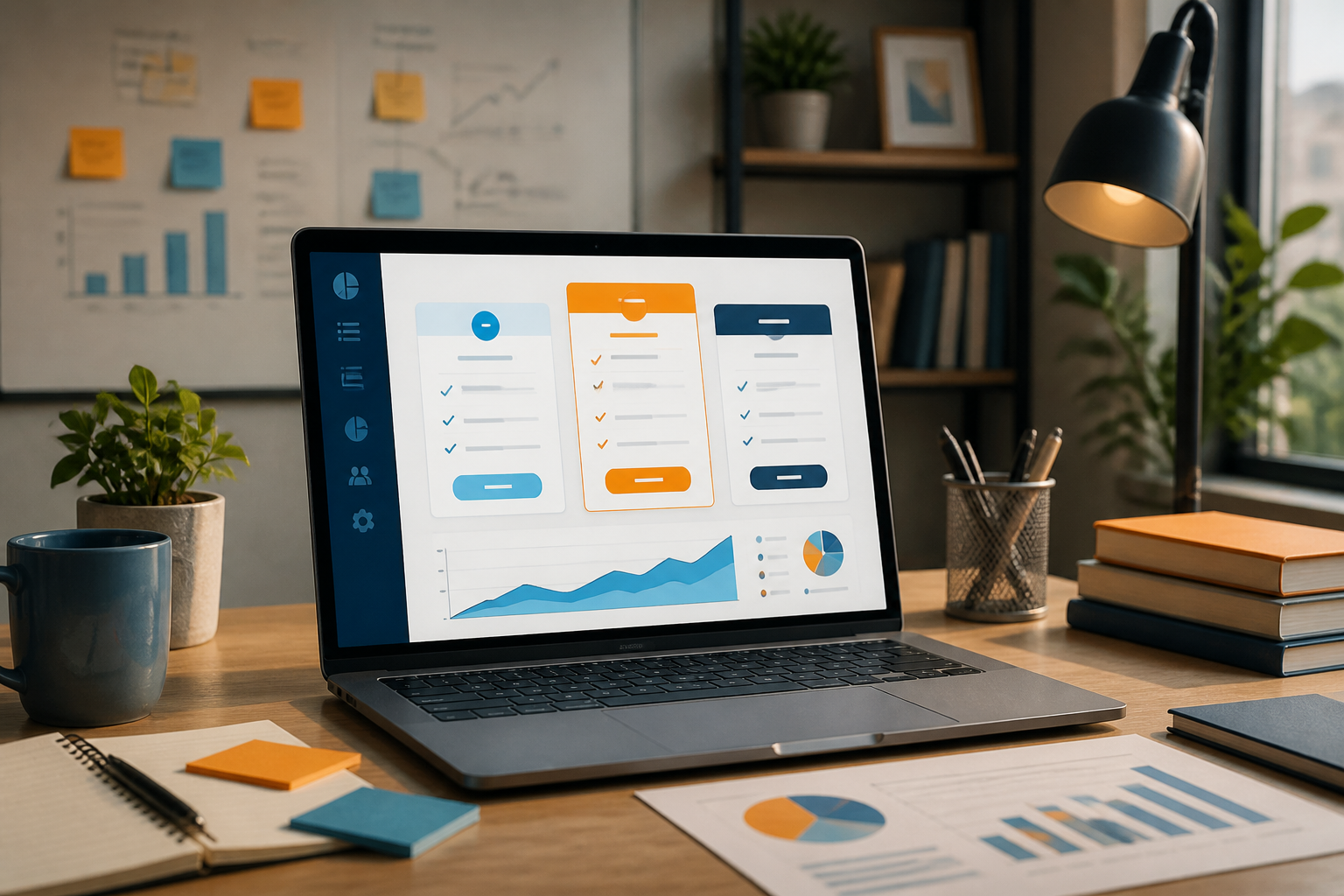
Many SaaS products start with a simple decision: set a monthly fee, then create several packages. This approach is easy to explain and helps businesses forecast revenue. However, as the variety of digital products sold—ranging from APIs, automation, analytics platforms, to AI-based services—grows, it becomes clear that monthly pricing does not always reflect the value received by customers.
The issue is not just determining whether the product price is too high or too low. The more important question is: what are customers actually paying for? Is it access to the application, the number of users, transaction volume, work outcomes, or time saved?
A good pricing model follows how customers derive benefits. If not, businesses may lose small customers due to high initial prices or miss out on revenue from larger customers who use the product much more.
The Four Most Common Pricing Models
1. Subscription Pricing
Customers pay a fixed fee every month or year to use the product. This model is suitable for applications that are used regularly and have relatively stable benefits, such as accounting software, project management, or document storage.
The advantage is simplicity. Customers know how much they need to pay, while the company has recurring revenue that is easier to project. The downside is that light users may feel they are paying too much, while heavy users may receive significant value without paying proportionately.
2. Per-User or Per-Seat
Pricing follows the number of users in one account. This model makes sense if the product's value increases as more team members participate. Examples include collaboration applications, internal communication, or task management.
However, per-user pricing is not always ideal. If customers intentionally limit accounts due to costs, the product may miss opportunities to be part of their entire workflow. For applications where most users only read information, per-seat pricing can also feel unfair.
3. Usage-Based Pricing
Customers pay based on usage, such as the number of transactions, API calls, documents processed, minutes of usage, or data capacity. Stripe describes this model as an approach that connects costs with actual customer consumption.
This model is appealing to customers who want to start with low costs. For product providers, revenue can grow as customer usage increases. However, bills become harder to predict. Customers may also feel anxious if there are no clear usage limits or cost alerts.
4. Hybrid Model
The hybrid model combines a fixed base fee with additional costs based on usage. For example, customers pay Rp500,000 per month, which includes 1,000 transactions, and then pay extra fees when exceeding that limit.
According to Stripe's guide on SaaS pricing models, the hybrid approach can provide a more stable base revenue while allowing prices to grow with usage. This often serves as a middle ground for products that require infrastructure costs but still want to give customers room to grow.
Start from Value Units, Not Server Costs
A common mistake is setting prices based on internal costs: hosting fees, the number of developers, or third-party service prices. While these costs are important for calculating margins, they are not necessarily the reasons customers are willing to pay.
For instance, an automation platform may incur costs based on the number of workflow executions. However, customers do not always think in terms of "executions." They may care more about the number of orders processed, hours saved, or input errors reduced.
Therefore, choose a value unit that is easily understood by customers and has a strong relationship with the product's benefits. This unit could be the number of active projects, successful transactions, completed documents, or specific outcomes received by customers.
Prices that are easy for the company to calculate are not necessarily easy for customers to understand.
How to Choose the Right Model?
- Understand usage patterns. Do customers use the product daily, only during certain periods, or seasonally? Highly fluctuating usage is usually better suited to usage-based or hybrid models.
- Determine who benefits. If benefits increase as more team members use the application, per-user may make sense. If benefits come from the amount of work completed, usage-based may be more relevant.
- Test if customers can estimate their bills. A usage-based model that is too complicated can deter potential customers before they try. Provide calculators, sample bills, or clear usage limits.
- Calculate worst-case costs. Don’t just look at average revenue. Check what costs arise when customers use the product intensively, especially if there are APIs, computing, storage, or AI services involved.
- Provide a reasonable upgrade path. Customers should be able to start with a small package and then move to a larger package without having to change their entire workflow.
A Simple Example for Automation Products
Imagine you are selling an application that connects online stores with inventory systems. There are three pricing options:
- Per-User: suitable if the main value comes from team collaboration.
- Per-Transaction: suitable if costs and benefits primarily follow the number of orders processed.
- Hybrid: a base fee covers a certain number of transactions, then there are additional fees for higher volumes.
For such products, the hybrid model is often easier to sell. Small customers get an affordable initial price, while larger customers pay more in line with the load they place on the system. However, this is not a hard and fast rule. If customers are very sensitive to cost uncertainty, tiered subscription packages may be a more comfortable option.
What You Can Do Now
If your product pricing is not clear, don’t rush to change all packages. Start with brief interviews with five to ten customers. Ask three questions: which part of the product they find most valuable, how they measure its benefits, and what concerns they have when looking at the pricing page.
After that, create two or three pricing model simulations. Compare not only potential revenue but also ease of understanding, risk of surprise bills, customer support costs, and margins as usage increases.
Pricing is not an element that is finished once created. Products change, customer behaviors change, and technology costs can also change. Therefore, pricing models need to be reviewed periodically—not to automatically raise prices, but to ensure customers continue to pay based on the value they truly perceive.
Sources & Further Reading
- SaaS Pricing Models: A Guide
- Pricing Models for Growth: What Businesses Need to Know
- What Is Usage-Based Pricing?
– Rio Yotto @rioyotto