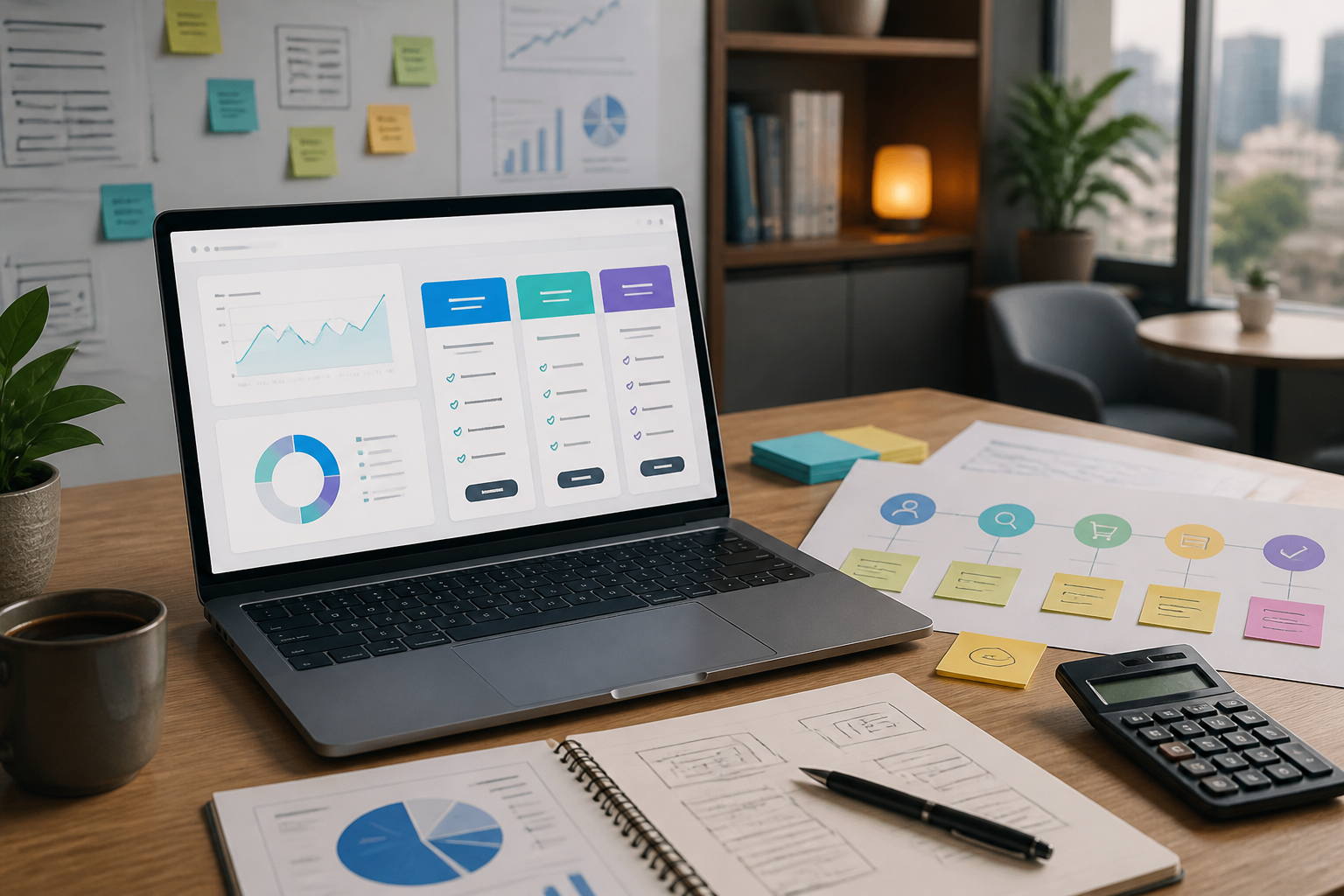
Many SaaS products start their business with a simple flat monthly price: customers choose a package and then pay the same amount each period. This model is easy to explain, but it doesn't always feel fair. Smaller customers may feel they are paying too much, while larger customers may be getting a lot of benefits without paying more in line with the value they receive.
This is where usage-based pricing becomes appealing. This model charges based on usage, such as the number of transactions, documents processed, gigabytes of storage, or API calls. Stripe explains that this model can help customers start with lower costs and increase spending as usage grows, but it also carries the risk of unpredictable bills and the need for accurate tracking.
Usage-based pricing is not just about changing the wording from “Rp99,000 per month” to “RpX per transaction.” It changes how products are sold, measured, and explained to customers.
When Does This Model Make Sense?
A usage-based model is suitable if the billed unit has a strong relationship with the value received by the customer. Examples include:
- Payment platforms charge based on the number of transactions.
- Storage services charge based on data capacity.
- Analytics APIs charge based on the number of requests or data volume.
- Document processing software charges based on the number of files successfully processed.
The principle is simple: the more benefits customers gain from the product, the more they pay. This differs from user-based billing if the number of users does not truly reflect value. Ten users who only open the dashboard once a month may not be more valuable than one user who runs thousands of automated processes.
However, not all products are suitable for this model. Project management applications, for example, may be easier to sell with a per-user or per-team fee because customers can estimate their budget upfront. If the usage metrics are difficult to understand or fluctuate drastically, this model could actually make potential customers hesitant.
Don't Start with Price, Start with Value Metric
Value metric is the unit used to connect price with product value. The most common mistake is choosing a metric that is easy for the system to calculate but does not make sense to customers.
For example, automation applications may charge based on the number of steps in a workflow. For technical teams, that number is easy to track. For customers, that number may not be meaningful. They might better understand “the number of workflows successfully executed” or “the number of orders processed.”
Test the metric with the following three questions:
- Do customers understand the unit without lengthy explanations?
- Does increased usage typically mean increased value for customers?
- Can costs be estimated before customers run the process?
If the answer to the second question is no, do not rush to implement that metric. Prices that feel unrelated to outcomes will lead customers to reduce usage, even when the product is actually helping them.
Choose a Hybrid Model to Reduce Surprises
A pure usage-based model is indeed flexible, but both business revenue and customer costs can fluctuate. Therefore, many products opt for a hybrid model: there is a fixed base fee, followed by additional charges based on usage.
For example, customers pay Rp199,000 per month, which includes 1,000 transactions. After exceeding that limit, they pay an additional fee per 100 transactions. This model provides two benefits: more predictable base revenue for the SaaS provider and a clear initial limit for customers.
Another alternative is a prepaid credit system. Customers purchase a certain amount of credits, which decrease each time a specific feature is used. This method can help customers control spending, especially if they are not yet aware of their monthly usage patterns.
Stripe and Paddle documentation shows that modern billing systems support combinations of subscription fees, per-user fees, add-ons, and usage-based fees. However, the availability of features on billing platforms does not automatically make pricing design good. Business logic must still be decided based on customer behavior and product cost structure.
Set Up Safeguards Before Launching
Sudden spikes in bills are one of the quickest ways to damage customer trust. Therefore, usage-based pricing needs to be equipped with safeguards from the start.
- Usage notifications: send alerts when customers reach 50%, 80%, and 100% of their package limit.
- Bill estimates: display estimated ongoing costs, not just usage numbers.
- Spending limits: provide options to halt processes or request approval when costs exceed a certain threshold.
- Usage history: customers should be able to see when, what features, and how many units were used.
- Clear rounding rules: explain whether a failed transaction is still counted, when usage resets, and how cancellations are treated.
This section is not just the finance team's job. Product, engineering, customer support, and sales need to understand the same definition of usage. If the dashboard shows 1,000 units while the invoice shows 1,050 units without explanation, the issue is no longer about pricing, but about credibility.
How to Test the Model Without Changing the Entire Business
Do not immediately move all customers to the new model. Start with limited experiments.
- Select one customer segment. Look for a group whose usage patterns are diverse enough and often request flexibility.
- Offer two options. Keep the flat-rate package as a comparison, then provide a hybrid or usage-based package.
- Track behavior, not just revenue. Observe activation, usage frequency, billing complaints, and customers who stop before reaching product value.
- Interview customers after one billing cycle. Ask if they understand how costs are calculated and if they can estimate the next bill.
- Refine the packaging before changing the numbers. If customers are confused, the issue may not be that the price is too high, but rather that the metrics are difficult to understand.
For initial experiments, do not chase the perfect formula. The goal is to find a reasonable relationship between usage, value, and customers' ability to estimate costs.
What Does This Mean for Small Businesses?
Usage-based pricing is not just a strategy for large cloud companies. Small digital products can also use it, as long as the metrics and tracking are simple. For example, automated report generation services can sell packages based on the number of completed reports, rather than the number of buttons or internal processes the system runs.
Start with a simple spreadsheet or dashboard to validate usage patterns. Once transaction volumes increase and calculations become complex, then consider specialized metering and billing systems. With this approach, businesses do not waste time building billing infrastructure before knowing if customers truly want that model.
Ultimately, good pricing is not the most creative pricing. Good pricing helps customers understand what they are paying for, connects it to the benefits they receive, and allows businesses to grow without creating unnecessary surprises.
Sources & Further Reading
- Usage-based pricing for SaaS: How to make the most of this pricing model — Stripe
- Usage-based billing — Stripe Documentation
- SaaS billing and pricing models — Paddle Developer Docs
– Rio Yotto @rioyotto