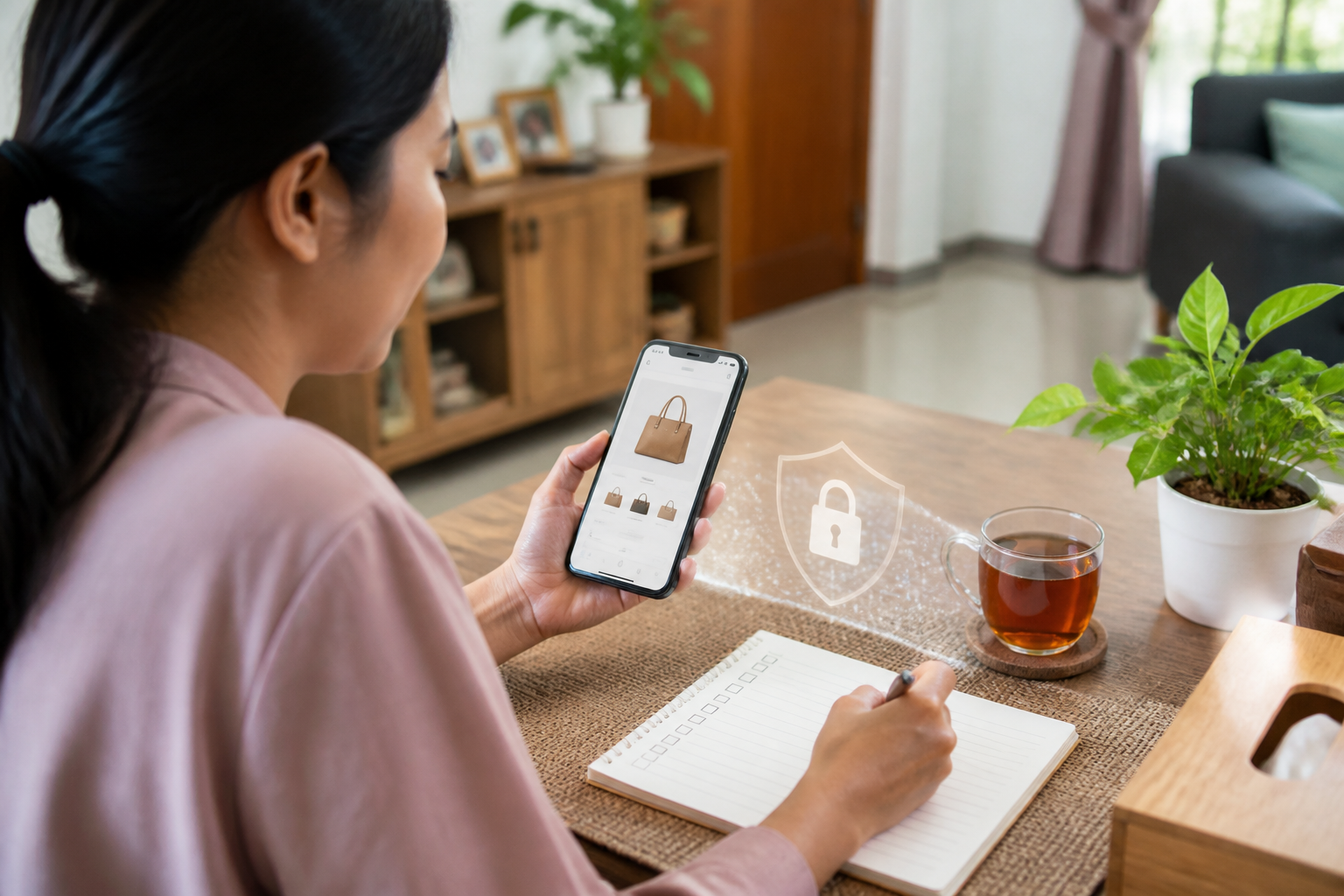
Shopping for household needs through marketplaces is indeed convenient. Soap, kitchen supplies, children's clothing, and even food can be ordered without leaving home. The problem is that the ease of checkout can also make us rush—especially when we see low prices, limited-time promotions, or urgent messages from sellers.
Safe online shopping does not mean we should be suspicious of all stores. We just need to get into the habit of checking a few things before money changes hands. Five-star ratings can be a consideration, but they should not be the sole basis for our decisions.
Why reviews and low prices are not enough?
Buyer reviews can provide insight into the quality of products and store service. However, reviews often do not answer the most important questions: does the purchased item truly meet our needs, is the store still active, and is the payment process conducted through a secure channel?
Prices that are significantly lower than other stores also need to be double-checked. It could be a genuine promotion, but it could also be a tactic to rush potential buyers into making decisions. In fraudulent practices, a sense of urgency is often exploited to get victims to follow instructions without checking details.
The Financial Services Authority reminds the public to keep their passwords and OTP codes confidential, and to report any financial transaction fraud immediately to the Indonesia Anti-Scam Centre or IASC. IASC is the coordination center for handling financial transaction fraud that connects victim reports with the relevant banks or payment service providers.
Checklist before hitting the checkout button
1. Check the store name, not just the star rating
See if the store name looks reasonable, has been operating for a sufficient amount of time, and has a sensible transaction history. A store with thousands of reviews is not necessarily bad, but pay attention to the review patterns.
- Do the reviews discuss the same product?
- Do the buyer photos look diverse and realistic?
- Do many reviews use exactly the same phrases?
- Are buyer complaints addressed well?
Don’t just read five-star reviews. One to three-star reviews often explain issues that may not be visible from product photos, such as incorrect sizes, overly thin materials, or colors that differ from the images.
2. Read the product description all the way to the bottom
Product photos are usually designed to look appealing. Descriptions help us understand more important details: size, material, quantity, warranty, expiration date, and color options.
For household items, pay attention to the units and quantities. A low price might be because the package only contains one item, not a set. For food or cosmetics, check the expiration date and storage instructions. For electronics, find out if the item is new, used, refurbished, or just an accessory.
3. Compare prices with several stores
Comparing prices doesn’t have to take hours. Just open two or three other stores and see if the differences are still reasonable. Also, calculate shipping costs, service fees, and any potential additional charges.
If a product is sold at a price significantly lower than the market price, consider it a sign to check more carefully—not automatically a golden opportunity. The product may be different, out of stock, or the seller may be trying to direct buyers outside the marketplace.
4. Keep communication within the app
Scammers often invite potential victims to switch to WhatsApp for various reasons, such as to get a lower price, speed up shipping, or avoid marketplace fees. After that, victims are asked to transfer money directly to a personal account or fill in data on a specific link.
Until the transaction is complete, use the chat and official payment features from the marketplace. This channel usually provides transaction records and clearer complaint mechanisms. If the seller insists on payment outside the app, it’s better to cancel the order and look for another store.
5. Don’t trust transfer proof as the only sign of payment
If we sell items through family groups, social media, or private chats, don’t send the item just because the buyer sends a screenshot of the transfer proof. Check the balance and transaction history directly from the banking app or digital wallet.
The OJK has also warned about the forgery of transfer proofs using AI technology. This means that images of payment proofs are becoming easier to create and should not replace checking the recipient's account.
When receiving messages claiming to be from the marketplace
Messages like “order problem,” “account will be blocked,” or “you’ve won a prize” are often designed to make us panic. Do not click on links sent via SMS, email, or chat immediately.
- Open the marketplace app manually, not through the message link.
- Check the order status from the account menu.
- Contact customer service through official channels within the app.
- Never give your OTP, PIN, password, or security code to anyone.
Official companies may ask us to check transaction status, but they should not ask for secret codes to “cancel orders” or “secure accounts.” If in doubt, stop the conversation until the information can be verified from the official app.
If you have already become a victim
Speed is crucial. Keep evidence of conversations, account numbers or digital wallet destinations, store links, payment proofs, and the time of the incident. Do not delete chats as this information can assist in the reporting process.
Immediately contact the bank or payment provider used. For financial transaction fraud, reports can also be submitted through the Indonesia Anti-Scam Centre. IASC explains that victim reports are forwarded digitally to the relevant financial institutions for follow-up. There is no guarantee that funds will be returned, but delaying the report can reduce the chances of blocking the funds.
What does this mean for us?
Safe online shopping is not about being a tech expert. Small habits are enough to help: reading product details, comparing prices, using official payments, checking balances directly, and not sharing secret codes.
Teach this checklist to family members who often shop online. Five minutes to check the store and payment methods is far cheaper than dealing with losses after a problematic transaction.
Sources & further reading
- Indonesia Anti-Scam Centre (IASC) - OJK
- Booklet on Scam Awareness - OJK
- Beware of Transfer Proof Forgery Using AI - OJK
– Rio Yotto @rioyotto